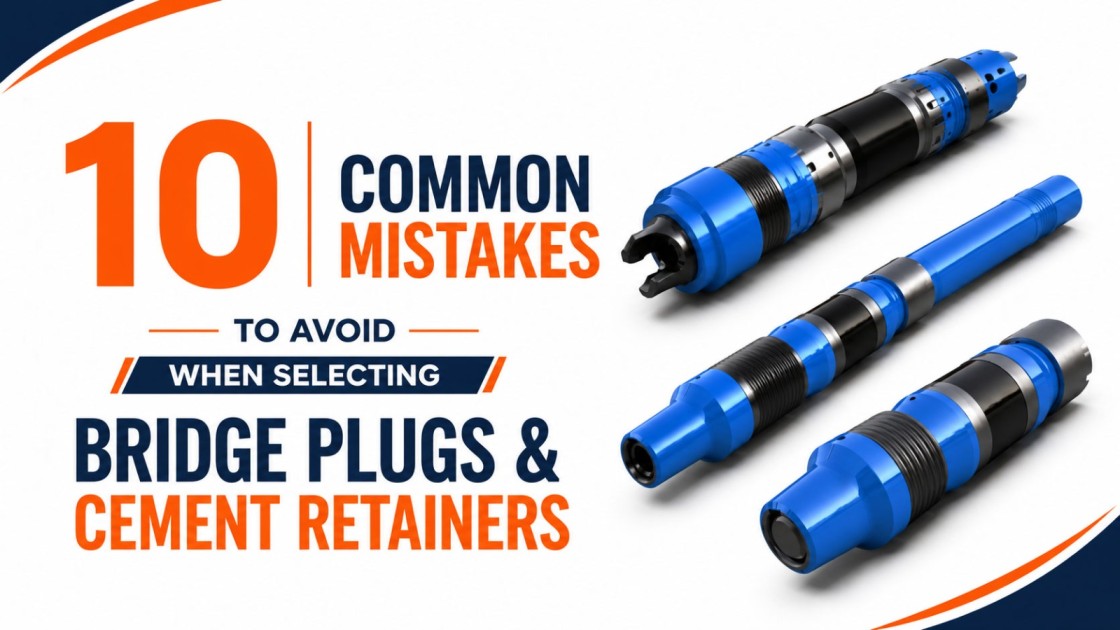
Selecting the right bridge plug or cement retainer is critical for successful well intervention operations. These downhole tools play an important role in zonal isolation, cementing, pressure testing, and maintaining long-term well integrity. Choosing the wrong tool can result in operational failures, increased intervention costs, and unnecessary downtime.
With years of experience supplying high-performance downhole tools to the global oil and gas industry, DIC Oil Tools manufactures and exports reliable Bridge Plugs and Cement Retainers engineered for demanding well intervention applications. Our solutions help operators achieve dependable zonal isolation, efficient cementing, and long-term well integrity in diverse downhole environments.
1. Selecting a Tool Without Understanding the Application
Selecting a bridge plug or cement retainer without properly understanding the application requirements can result in poor tool performance, ineffective isolation, and operational challenges. Different well intervention activities require different tool capabilities, so the selected equipment must match the specific objectives of the operation.
Before selecting a tool, operators should evaluate:
- Determining the isolation objective and identifying the exact area that requires separation.
- Evaluating operation duration and temporary or permanent isolation requirements.
- Carefully reviewing pressure ratings, differential pressure, and testing conditions.
- Understanding cementing objectives and required zonal isolation performance.
- Considering future intervention plans and possible retrieval requirements.
2. Ignoring Proper Casing Compatibility
Bridge plugs and cement retainers must be properly matched with the casing where they will be installed. Incorrect sizing can cause poor anchoring, ineffective sealing, and operational failure.
Common compatibility considerations include:
- Verifying actual casing specifications beyond nominal size information.
- Considering casing weight effects on anchoring and sealing performance.
- Evaluating internal diameter variations affecting tool placement accuracy.
- Checking casing wear, damage, and deformation affecting isolation quality.
3. Overlooking Pressure and Temperature Conditions
Downhole environments can be extremely challenging. Tools must be capable of handling the pressure and temperature conditions expected during the operation.
Important factors include:
- Assessing differential pressure requirements to ensure reliable zonal isolation and tool performance.
- Reviewing bottom-hole temperature and downhole fluid exposure conditions.
- Confirming pressure testing requirements and holding capacity limits.
- Assessing squeeze pressures during cementing and remedial operations.
4. Choosing the Wrong Setting Method
Bridge plugs and cement retainers are available with different setting methods depending on operational requirements.
Common methods include:
- Selecting wireline setting for accurate and efficient deployment operations.
- Using hydraulic setting for controlled activation and reliable anchoring.
- Applying mechanical setting for simple and controlled tool operation.
- Choosing coiled tubing deployment for challenging well conditions.
5. Making Decisions Based Only on Cost
The lowest-priced option does not always provide the best overall value. In oilfield operations, equipment reliability directly affects overall project economics.
Choosing a lower-cost tool without evaluating its performance may lead to:
- Avoiding failed setting attempts caused by improper tool selection.
- Reducing additional intervention runs and unnecessary operational downtime.
- Preventing higher rig time and increased project expenses.
- Minimizing production delays and reduced operational efficiency.
6. Not Considering Cementing Requirements
For cement retainer applications, the cementing process must be evaluated before selecting equipment.
Important considerations include:
- Evaluating squeeze pressure and expected pumping conditions properly.
- Reviewing cement placement methods and operational procedures carefully.
- Considering cement volume and slurry design requirements accurately.
- Assessing formation conditions and pressure behavior during operations.
- Ensuring cement compatibility with downhole fluids and chemicals.
7. Ignoring Material and Environmental Compatibility
Downhole tools operate in challenging well conditions where corrosion, harsh chemicals, high pressure, and extreme temperatures can affect their performance and reliability.
Material selection should consider:
- Selecting corrosion-resistant materials for aggressive downhole environments.
- Maintaining structural integrity under demanding downhole operating conditions.
- Confirming seal compatibility for reliable sealing performance.
- Evaluating H₂S and CO₂ exposure resistance requirements.
- Considering wear resistance and long-term material durability.
8. Not Planning for Future Well Requirements
Choosing equipment solely for the current operation can lead to challenges during future interventions.
Operators should consider the following options:
- Selecting retrievable tools for temporary isolation operations.
- Choosing permanent tools for long-term isolation applications.
- Considering drillable tools for future well access requirements.
- Using millable tools for efficient intervention removal operations.
9. Ignoring Manufacturer Expertise and Technical Support
Tool performance depends not only on product design but also on manufacturer expertise and support.
Before selecting a supplier, operators should consider:
- Reviewing manufacturing experience and quality control standards.
- Evaluating product testing and performance validation procedures.
- Considering field experience and proven application history.
- Confirming engineering support and technical consultation availability.
- Assessing custom solutions for specific well challenges.
10. Poor Pre-Job Planning
Even high-quality downhole tools require proper planning for successful deployment.
A complete pre-job review should include:
- Reviewing well data including depth, pressure, temperature, and casing.
- Verifying tool compatibility with required specifications and conditions.
- Planning installation procedures and deployment requirements properly.
- Evaluating operational risks and implementing effective mitigation strategies.
- Confirming post-installation testing and verification requirements.
Conclusion
Selecting the right bridge plug or cement retainer requires a thorough understanding of well conditions, operational objectives, and performance requirements. By avoiding common mistakes such as incorrect sizing, ignoring pressure limitations, overlooking material compatibility, and focusing only on cost, operators can improve safety, efficiency, and long-term well integrity. DIC Oil Tools continues to deliver reliable downhole solutions engineered to meet the evolving demands of the oil and gas industry. With the right engineering approach and proper tool selection, operators can achieve reliable isolation, improved well performance, and successful intervention operations. Contact DIC Oil Tools today to find the right Bridge Plugs and Cement Retainers for your well intervention requirements.